
Sources for Tulare Previous Residents
Each source covers a different era and question. The table makes the backward trail visible before a search begins. Start with the land identity, then add occupancy or family evidence rather than asking a deed to answer every question.
| Source | Verified years | Where held | What it shows |
|---|---|---|---|
| Recorder deed books and index | Beginning and online cutoff not published | Recorder online, counter, microfiche | Ownership chain and recorded instruments |
| Tulare directories | 1888; 1904-05; 1908-09; 1921; 1925; 1932-93 with gaps | Hillman room | Named resident or business at an address when printed |
| Sanborn maps | 1885, 1887, 1892, 1906, 1913 | Library of Congress | Building footprint, use, and construction clues |
| Federal census | Decennial through 1950 | NARA, Ancestry, library | Household relationships, ages, and birthplace |
| City permits | Coverage start not published | City counter or CPRA request | Work and named application parties where retained |
| Newspapers and obituaries | Advance-Register unspecified; Delta 1892-1928 | Hillman microfilm | Moves, deaths, relatives, and probate leads |
The coverage is intentionally uneven. Previous residents are reconstructed from overlapping evidence, not from a single complete book.
Tulare Previous Residents and Deeds
The Recorder's index is the land-chain starting point. Find the current parcel by address or APN, save the situs and legal description, then search the current owner's acquisition deed. The Recorder advises trying spelling variants. A deed image or copy supplies the grantor, grantee, recording date, document number, and operative legal description.
- Find the current parcel and record its APN, map, situs, and legal description.
- Search the current owner as a grantee and identify the acquisition instrument.
- Inspect the copy for the seller, buyer, recording date, legal description, and parcel reference.
- Search that seller as an earlier grantee and repeat the chain.
- Use the legal description to bridge an APN change, subdivision, or street-number question.
- Grantor
- The party conveying an interest, often the seller in a deed.
- Grantee
- The party receiving an interest, often the buyer in a deed.
- Chain of title
- The linked sequence of recorded transfers that explains land ownership over time.
- Legal description
- The formal land description that can remain stable when an address or parcel number changes.
Online search, purchased image, public counter, microfiche, and mail request are separate access channels. A recorded deed proves an instrument and a land relationship. It does not prove that the grantee occupied the property.
When the Tulare Records Index Stops
The exact online start year was not stated on the inspected Recorder instructions. When the web index or purchased image does not reach the needed book, the county advertises public computers and microfiche at Room 103, Monday through Friday, 8 a.m. to 5 p.m. Copies can also be requested at the counter or by mail through the Recorded Document Request Form.
The counter accepts credit card, check, money order, or cash for the application route. Mail payment is payable to Tulare County Assessor/Clerk-Recorder, 221 S. Mooney Blvd., Room 105, Visalia, CA 93291-4593, and cash should not be mailed. The recording facts sheet describes the access routes, and the 2025 Recorder fee schedule lists posted copy charges. The research also records staff research at $69 per hour with a quarter-hour minimum. Confirm current charges before relying on that service.
Insider tip. Microfiche and the public terminal can reach older media that a web image workflow does not. Keep the book, page, document number, and legal description with every earlier-owner clue.
Match Deeds to Tulare Directory Years
Once an owner chain has a date, place it beside the closest Hillman directory volume. The local shelf begins in 1888 and includes 1904-05, 1908-09, 1921, 1925, 1932-33, countywide Polk's titles from 1934 through 1956-58 with gaps, a 1955 Tulare-Visalia book, and Tulare City titles from 1961 through 1993 with gaps. Later titles include Pixley, Tipton, and Woodville.
A directory line can support historical occupancy when it actually prints a name and address. The research did not verify a scanned local entry or a universal owner-status notation. Use the edition's own abbreviation key, and ask whether a reverse section exists. The full collection details are on the Tulare city directory collections page.
Tulare Previous Residents in Sanborn Maps
Sanborn maps from 1885, 1887, 1892, 1906, and 1913 give a physical frame for a previous-residents search. They can show building footprint, use, construction clues, and a block's changing form. They cannot name every occupant. Pair a map with the nearest directory year and the deed's legal description.
If a street number appears to change, compare lot shape, block edges, nearby landmarks, and the legal description. The research did not locate an official Tulare street-renumbering year. A stable building or lot can bridge two address spellings without inventing a date for the change.
Tulare Permit Clues for Past Residents
City permit or plan files can record construction, enlargement, alteration, repair, moving, demolition, occupancy changes, and regulated electrical, gas, mechanical, or plumbing work. The City Permit Center is at 411 E. Kern Avenue and lists 559-684-4218, with published weekday counter hours of 8 to 5 and submission hours of 9 to 4. A City record request should state the exact address, permit or case type, and date range.
For unincorporated parcels, County RMA CSS uses address or parcel location, APN, associated address, and selected action steps. Determine the jurisdiction first. A permit names an applicant, owner, contractor, or agent where the file makes that information public. It can date a building change, not prove who lived there.
The Contractors State License Board lookup can be a secondary date and affiliation clue when a permit names a contractor.
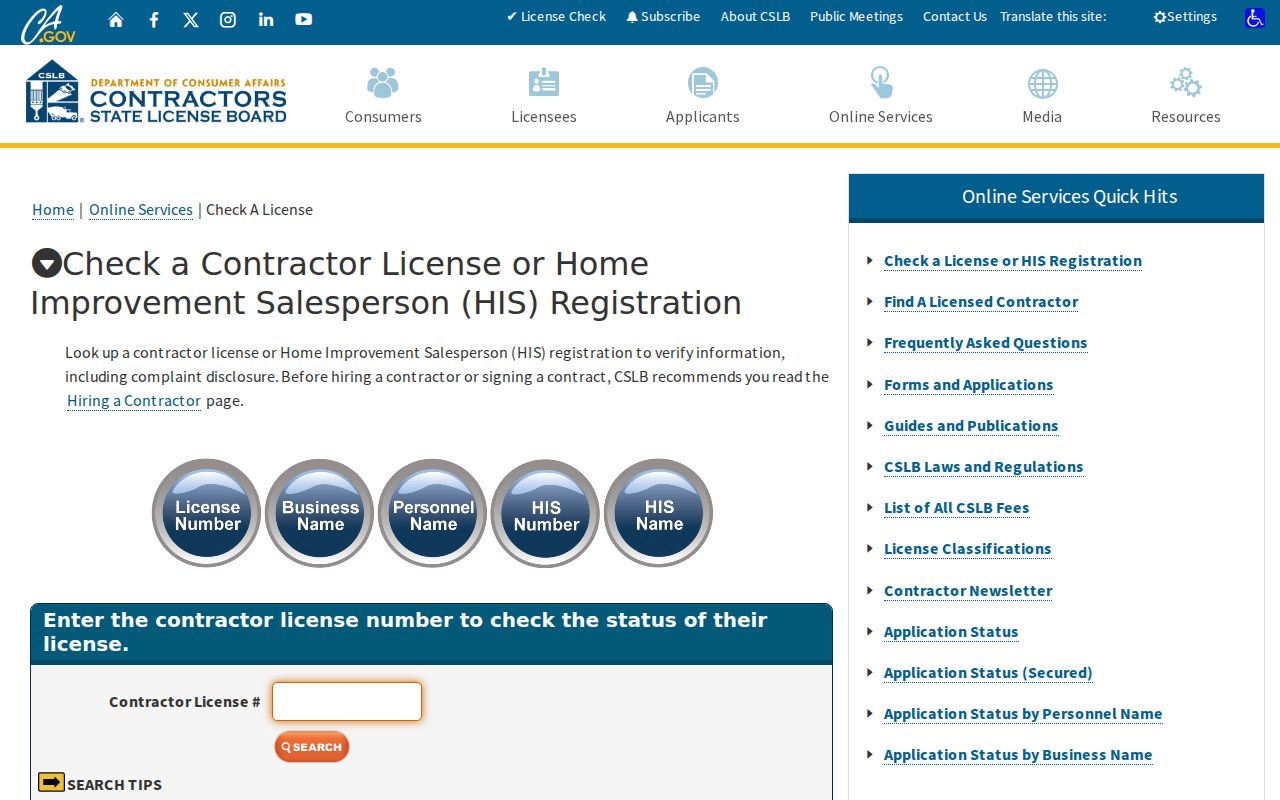
A contractor result supports a work-history connection. It should stay separate from the past-household evidence.
Tulare Past-Resident Business Records
Business and professional records can help explain a name printed near a Tulare address. California bizfile shows entity filing details, while the County FBN record connects a trade name to a filed registrant and address. DCA and separate boards show credentials, status, issue dates, and public discipline where published. These are useful when a past resident ran a business, held a license, or appeared in a public commercial role.
An alcoholic-beverage license can supply another date or business identity clue through the California ABC lookup. A business address, agent-for-service address, license address, and parcel situs may all differ. Preserve the source role and date rather than calling a business connection a home.
The California Alcoholic Beverage License Lookup is the source for the licensed-business route.
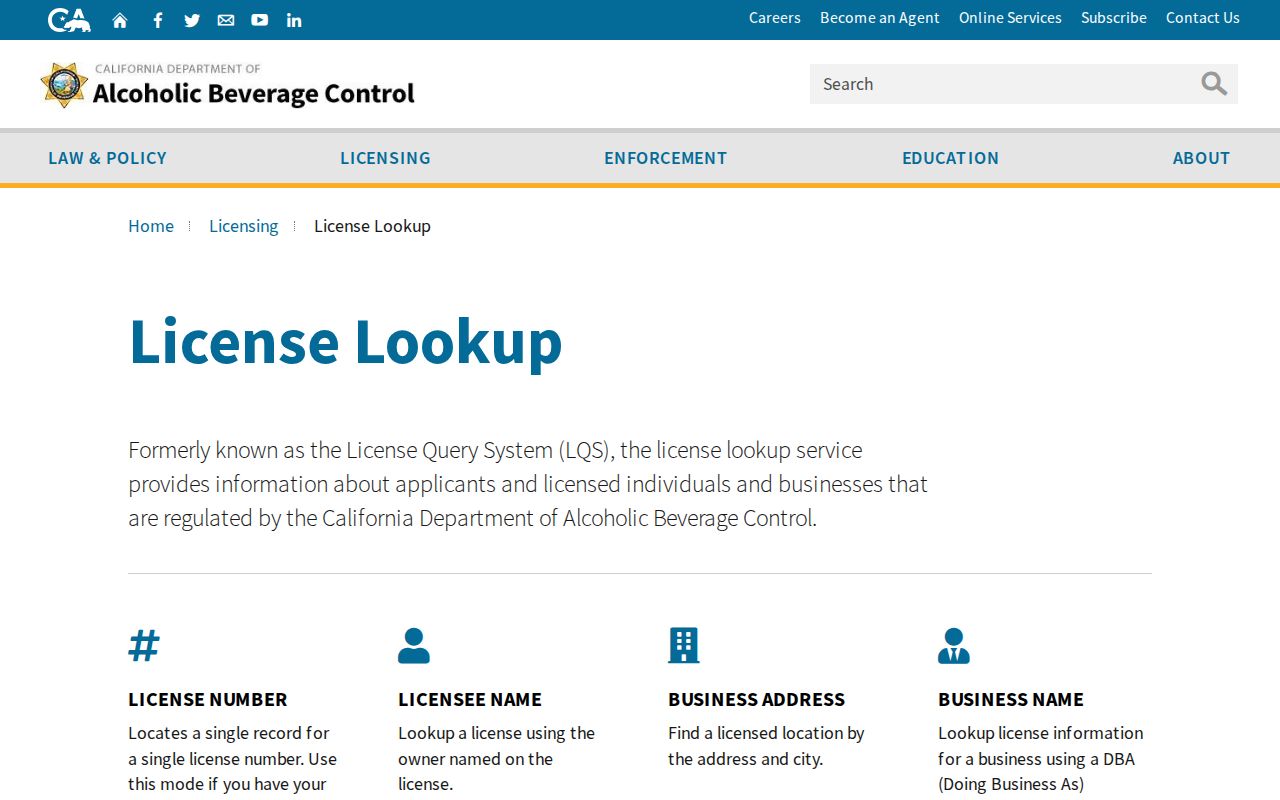
The screen is a business record, so its value in a house history is corroborating context only.
Tulare Census Clues for Previous Residents
The federal census adds household relationships, ages, and birthplaces that a directory ordinarily does not. The 72-year rule makes 1950 the latest public decennial census as of 2026. Pair a 1940 or 1950 census with the nearest Tulare city directory year, then compare the address, names, and family structure.
Census geography and printed address formats may not line up cleanly with a modern parcel. A Sanborn sheet, deed legal description, newspaper notice, or cemetery index can help keep the building and family separate. A directory name that matches a census household is moderate historical occupancy evidence, not a current record.
Tulare Past Households in Directories
Hillman holds Tulare Advance-Register microfilm and Visalia Daily Delta or Morning Delta film for 1892-1928, along with cemetery indexes and limited Porterville Evening Recorder obituaries. Newspapers can show a move, death, relative, club connection, occupation, or probate lead. Use the event date and source page, then compare with a deed or directory line.
Probate petitions, notices, and inventories can identify a decedent, personal representative, or publicly listed interested person. They can close a house-history trail for lawful heir research, but sensitive material may be redacted. A missing obituary or probate result is weak negative evidence.
House-history boundary. Previous residents research is for documented family, property, and local-history work. Do not turn an old address chain into a way to stalk, harass, intimidate, or harm anyone.
Tulare Previous Residents and Renumbering
No official street-renumbering year was located in the research. An apparent break can reflect a changed number, parcel split, rebuilt structure, directory scope, spelling, or a real move. Bridge it with lot and block, legal description, subdivision map, Sanborn sheet, APN history, and nearby directory entries.
Write the uncertainty into the house history. “The same parcel is likely” is more accurate than a made-up date or a claim that a printed household stayed in place. If the question becomes who owns the property now, move to the current Tulare address chain rather than extending a historical clue beyond its date.
Lawful Tulare Previous-Resident Research
A record trail can support genealogy, an heir question, restoration research, a neighborhood story, or a search for a former classmate. It should not be used to identify every person connected with a home. Owners, occupants, businesses, and historical names are separate categories, and the custodian's copy or image controls the final wording.
Use the narrowest record that answers the question. Preserve citations, stop at a confidential record, and let an unresolved gap remain unresolved. Previous residents are a historical reconstruction, not a live directory.